WHO COUNTS IN TRUMP AMERICA?
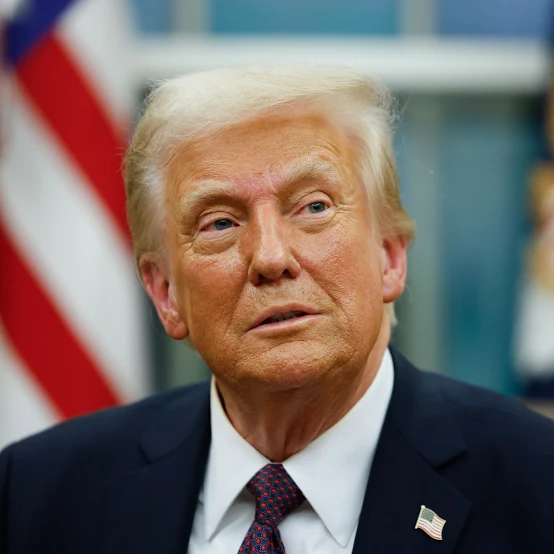
Do undocumented immigrants count as people?
Anyone watching as Immigration and Customs Enforcement (ICE) agents increasingly bypass due process to detain and deport unauthorised immigrants might assume the Trump administration’s answer is a resounding “no”. Now, regardless of deportation policies, the approximately 11 million unauthorised immigrants in the United States could soon disappear, statistically at least, if Republicans have their way.
President Trump recently instructed the US Department of Commerce to prepare for a new census that excludes undocumented immigrants. This marks the latest and boldest attempt by Trump and his congressional allies to alter how the census accounts for unauthorised immigrants. Although not explicitly stated, Trump may be trying to push this off-cycle census through ahead of the 2028 presidential election or even before next year’s midterms, which he appears intent on influencing.
Assuming Trump was being literal in his social media declaration that “People who are in our Country illegally WILL NOT BE COUNTED IN THE CENSUS,” millions could effectively vanish from the official population count. If this incomplete census were used for congressional apportionment, it would reduce representation in Congress and the Electoral College for states with large numbers of unauthorised immigrants.
The immediate partisan impact is unclear. According to the Pew Research Center, if non-citizens had been excluded before the 2020 election, California, Florida and Texas would each have lost one congressional seat and Electoral College vote, while Alabama, Minnesota and Ohio would each have gained one. Political gerrymandering would likely shape who benefits from redistricting. Republicans are already aggressively redrawing maps in states like Texas, with possible retaliatory moves in California and other Democrat-led states. Beyond electoral shifts, the broader goal appears to be marginalising undocumented people and punishing “sanctuary” jurisdictions. This reinforces the Republican narrative that Democrats deliberately tolerate illegal immigration for political gain.
Legally, how to count unauthorised immigrants depends on interpreting the Constitution, the framers’ intent and the scope of executive authority in conducting the census. Non-citizens have historically been included in the count, and the Supreme Court has never ruled directly on excluding them. However, with a conservative supermajority on the court, there is a real chance the justices could allow it – either by reinterpreting the Constitution’s language or deferring to the executive branch.
Even if Trump fails to push through a new census, his administration could still suppress the count by other means. During his first term, he tried to add a citizenship question to the 2020 census. The Census Bureau stopped collecting this data from all respondents in 1950 and removed the question entirely by 2000, instead gathering it through separate surveys such as the American Community Survey. Many feared its return would deter participation from undocumented, and even legal, immigrants, leading to an undercount. The Supreme Court blocked the effort in 2019, citing insufficient justification. But it left the door open to future attempts with more credible rationales.
Related Posts



Andrew
Thanks

JOHN
YES
Andrew
How far
John
Me
Mary
You

Anthony Gandonu
Why is the fear for his immigration policy, let the supreme Court decide.



6 comments